

Life may feel complex, uncertain, and messy at times — you don’t have to navigate it alone
approach.
I work from a holistic, person-centred approach that sees you in the full context of your life - your experiences, strengths, needs, and goals.
Why? Because no two people or experiences are exactly the same. Our biological, psychological, and social worlds interact in ways that shape how we think, feel, and move through life.
By understanding what matters to you, therapeutic support can be shaped in a way that feels relevant, accessible, helpful, and meaningful.
I believe mental health support and therapy is most effective when it is tailored to you and your life - compassionate, non-judgemental and grounded in evidence.
My approach is shaped by a deep commitment to both trauma‑informed and neurodiversity‑affirming practice. I work with an understanding that neurodevelopmental conditions and experiences of trauma often interact in complex ways that can influence a person’s overall health and quality of life.
I bring both professional knowledge and a commitment to ongoing learning. My goal is to offer support that is flexible, evidence‑based, and responsive to the unique challenges and strengths you bring.
my why.
I see mental health care and therapeutic support as essential for both our personal and collective wellbeing. That matters to me. It drives my commitment to working in this space — to meet people in ways that are respectful, inclusive, and responsive.
My interest in mental health and the broader human experience, has been constant and enduring - only deepening with time and experience.
I am, unapologetically — a study nerd. And this space provides endless opportunities to continue learning and developing skills. Drawing on diverse fields and disciplines including psychology, medicine, neuroscience, sociology, philosophy, public health, and more— the science and contemporary research contributing to mental health care, continues to evolve.
Even more so though, in the simple truth that no two people are ever the same — working in mental health continually offers opportunities to learn, reflect, and grow. We are all a constellation of intersecting histories, relationships, identities, and experiences — and for me, this work is about honouring that complexity. The opportunities to connect with people, and to offer support through understanding the interactions between these systems, are what make this work meaningful and a true privilege.
If we meet in this space, you will meet me as I am— flawed, imperfect, human.
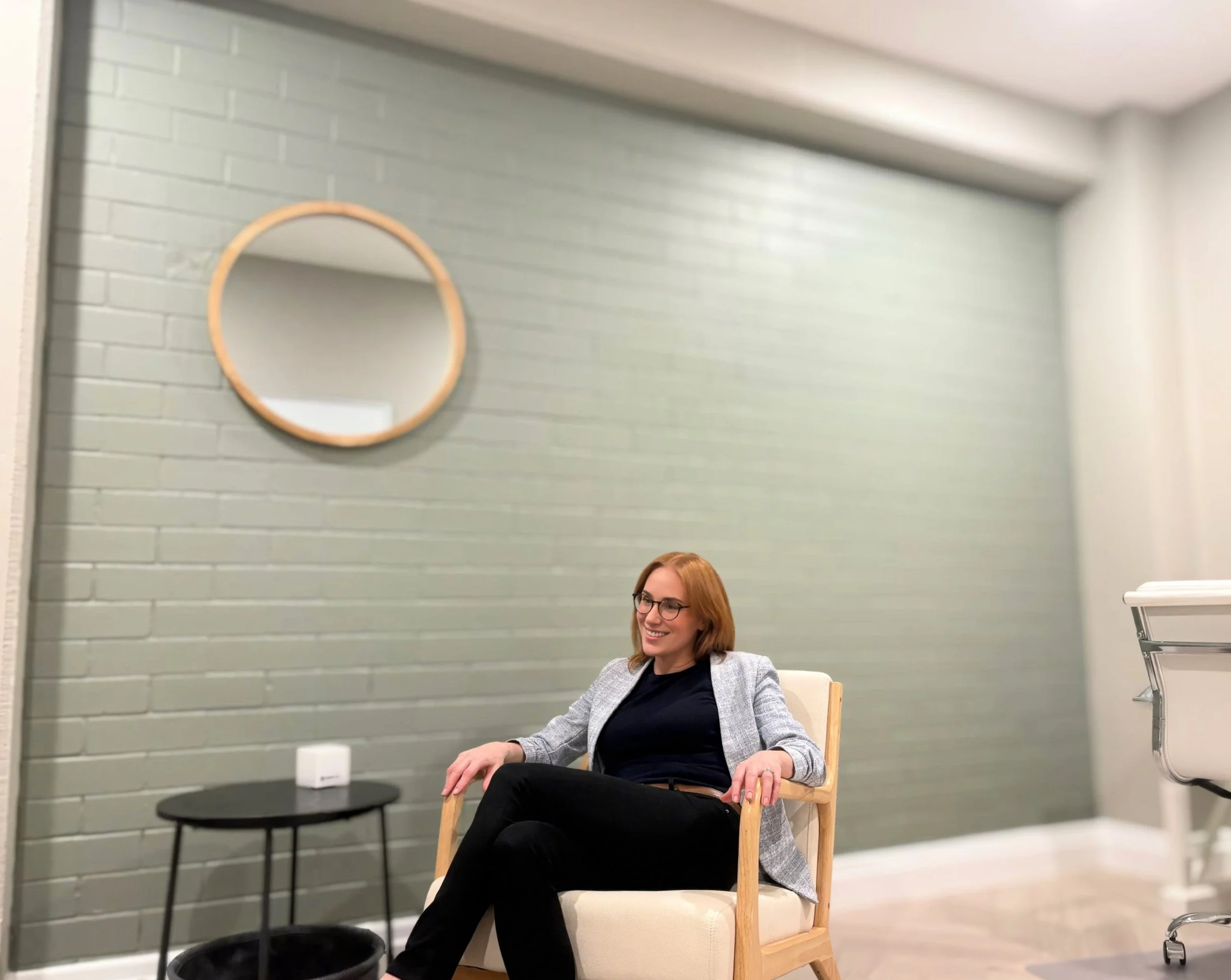
kimbali wild
AMHSW
BSW (Hons I), MPH
-
qualifications & credentials.
Education• Bachelor of Social Work (Honours Class I)
University of Queensland• Master of Public Health (Distinction)
Griffith UniversityProfessional Credentials & Registration
• Accredited Mental Health Social Worker (MAASW AMHSW)
Credentialed by the Australian Association of Social Workers (AASW)• Medicare‑registered provider (MHTP and CCMP)
• WorkCover Queensland registered provider
• DVA provider
• Private Health Insurance provider (eligible funds)
Research Publication
• International Journal of Law and Psychiatry
Clinician perspectives on involuntary psychiatric treatment. View Publication
-
some background.
Before establishing steady space. I spent over 18 years working across a number of different tertiary mental health teams. My roles included senior clinical social work positions within Adult Mental Health, Mood and Psychosis Academic Clinical Units, Older Adult (65+) Mental Health, and Disaster Mental Health.I have worked with individuals, families and carers, and facilitated different group therapy programs. My experience includes working with people diagnosed with mental health conditions of both high and low prevalence — within community and hospital settings, from short-term and crisis response — to longer-term and continuing care.
Alongside direct practice, I have enjoyed providing clinical supervision to social work clinicians and students for over 15 years.
Combining strong interests in mental health policy, public health, and research — I have developed and delivered education and training across broad areas of practice, including suicide assessment and prevention; family and carer engagement and support; evidence-based mental health promotion; and quality improvement activities targeting improved access and early intervention.
My postgraduate research explored the high and increasing rates of involuntary psychiatric treatment within Qld mental health services.
accredited mental health social workers
What is an AMHSW?
AMHSW’s are social workers who have been assessed and credentialled through the Australian Association of Social Workers (AASW) as having specialist mental health expertise. This process is undertaken on behalf of the Federal Government and Medicare Australia. Social work & AMHSW Fact Sheet
The training and ongoing requirements to maintain accreditation ensure safe, evidence‑based, and effective mental health care.
A defining feature of AMHSW practice is a whole-of-person perspective - drawing on a biopsychosocial approach to understand how social, environmental, cultural, and systemic factors shape our mental health and wellbeing. This person‑in‑environment approach is a core element of social work and is one of the key distinctions between social work and other mental health professions.
-
All AMHSWs have a qualifying degree in professional social work practice. Like other health professionals, social workers are tertiary qualified - as a 4-year undergraduate or postgraduate degree.
Mental health is essential core curriculum in accredited higher education social work programs. This requires demonstration of understanding mental health issues and practice interventions before they graduate from their social work degree at university.The majority of AMHSWs also have further training and qualifications, with over 60 per cent having postgraduate degree qualifications.
-
Social workers who hold accredited membership with the AASW can pursue additional postgraduate training and apply for a credentialing process to become accredited. This accreditation is formally recognised by the Federal Government and signals advanced expertise in mental health practice.
Before applying for credentialling, there is also a prerequisite to complete a number of years of supervised practice in mental health settings delivering focused psychological services.
They must also meet continuing professional development (CPD) requirements; demonstrate advanced clinical knowledge and skills through rigorous assessment processes; and provide referee statements from employers and supervisors.
Accreditation is not a one‑off achievement. To maintain accreditation requirements, ongoing clinical supervision and a minimum 30 hours of continuing education are maintained each year. This includes 20 hours directly related to mental health practice and 10 hours of Focused Psychological Strategies training - required for all allied health professionals to remain Medicare registered provided.
-
AMHSWs are subject to audit by the Mental Health Unit of the AASW to ensure these competency standards and ongoing learning are maintained.
AMHSWs also agree to abide by the AASW Code of Ethics, to ensure high standards of ethics are maintained in the service provision.
-
AMHSWs are registered providers with Medicare Australia. They have been assessed on behalf of the Commonwealth Government by the AASW as having specialist mental health expertise.
AMHSWs are one of the few designated allied health professional groups eligible to provide private mental health services to people with diagnosable mental health conditions or people ‘at risk’ of developing mental health conditions under the Commonwealth Medicare initiative.
Along with provider eligibility for a number of Commonwealth funded supports & other schemes (for e.g. NDIS, DVA) - they are recognised providers of psychological services with many Private Health Insurance Funds.
-
AMHSWs have particular expertise in helping individuals whose mental health problems co-exist with other difficulties such as family distress, drug and alcohol abuse, unemployment, disability, poverty, and trauma.
They seek to identify factors that exacerbate or ameliorate a person’s mental health problems and focus on building strengths and augmenting social supports.
AMHSWs work with a broad range of populations. Some specialise in working with particular client groups such as adolescents, adults or older people, and in the use of particular therapeutic approaches such as marital or family therapy. Social workers also work with people with specific disorders, and those at risk of suicide.
-
Advanced training is expected of AMHSWs, preparing and providing them with the skills required to support people with highly complex presentations and comorbidities.
They have the skills and knowledge to assess and intervene around the impacts of physical illness, specifically chronic and advanced chronic or terminal illness - on a person’s psychological wellbeing.
connect here.
You can use the form on this page for general enquiries, or further questions that may help you to determine if this might be the right fit for you.
If we establish that it’s not, that’s okay. It’s important you find a place where your preferences and needs are best met. There are many different types of professional services available across a stepped-care model designed to best meet different levels of care and support needs.
When requested and where possible, I can provide information and suggestions for alternative options and services that may fit and be suitable for what you are seeking.
If you would like to reach out and request an appointment now — you can head straight to the booking request form below.